From Nissan to Adidas. Lens That’s Partnerships with Leading Brands in the GCC region
How Augmented Reality is transforming marketing across the GCC region. Discover how Lens That collaborates with leading brands, from Nissan and Adidas to KFC and Essence, to create immersive AR experiences across industries.
The GCC region, including the UAE, Saudi Arabia, Qatar, Kuwait, Oman, and Bahrain, is rapidly becoming one of the most exciting markets for digital innovation. With high smartphone growth, a digitally engaged and tech-savvy population, and major investments in digital transformation,the region is moving decisively toward interactive, digital marketing.
As digital ad spend continues to grow and consumers shift their attention online, traditional advertising formats are struggling to stand out. Audiences in the Gulf States expect fast, immersive, and meaningful interactions, especially in an era shaped by AI-driven content. This is where Augmented Reality plays a crucial role.
Why AR Works in the GCC
AR aligns perfectly with the GCC region’s digital-first mindset. Online platforms are now the primary space for discovery, research, and social interaction. At the same time, the rise of AI has increased expectations for smarter, more dynamic digital content.
AR meets these expectations by blending technology with play, storytelling, and utility. Instead of interrupting users, AR invites them in, allowing brands to educate, entertain, and connect without contributing to ad fatigue. This balance is especially important in the Arabian Gulf States, where premium experiences and innovation are highly valued.
Fashion and Retail. Bringing Products to Life with AR
In fashion and retail, AR has shifted the focus from static product displays to interactive product discoveries. Virtual try-ons and 3D visualizations allow users to explore items in real time, turning browsing into an engaging, confidence-building process.
At Lens That, we delivered AR experiences for brands such as Adidas and Bloomingdale’s, adapting global brand identities to local retail environments.
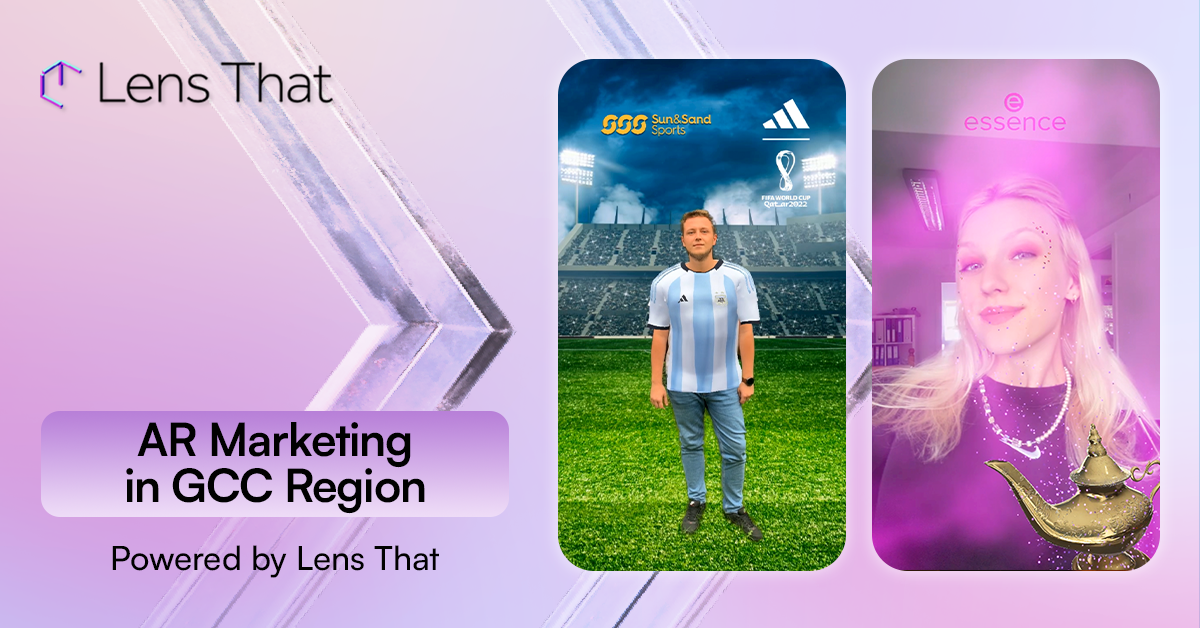
During the FIFA World Cup 2022 in Qatar, we recreated official Adidas national team jerseys in AR, allowing users to try on meticulously detailed 3D kits and examine them from every angle. In luxury retail, we brought physical installations to life through QR-powered AR experiences at Bloomingdale’s in Dubai Mall, extending in-store storytelling into the digital layer.
Beauty. Building Shopping Confidence Through Virtual Try-Ons
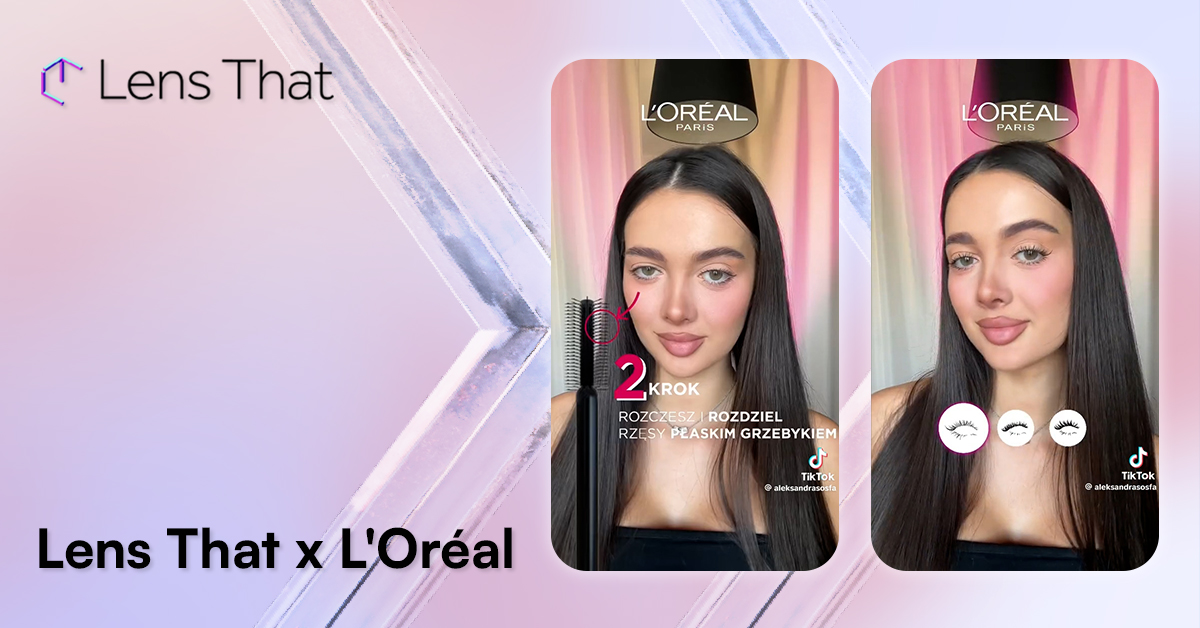
Beauty marketing in the Arabian Gulf States have embraced AR as both a creative enhancement and a practical tool. Virtual try-ons allow users to experiment with makeup in a comfortable environment, while hyper-realistic rendering ensures accurate previews that reflect real-world results.
Working with Essence, we created AR makeup experiences that combined product try-ons with playful, animated transformations. These experiences went beyond simple testing, helping users make more confident purchasing decisions.
Food and Beverage: Bringing real-life participation online
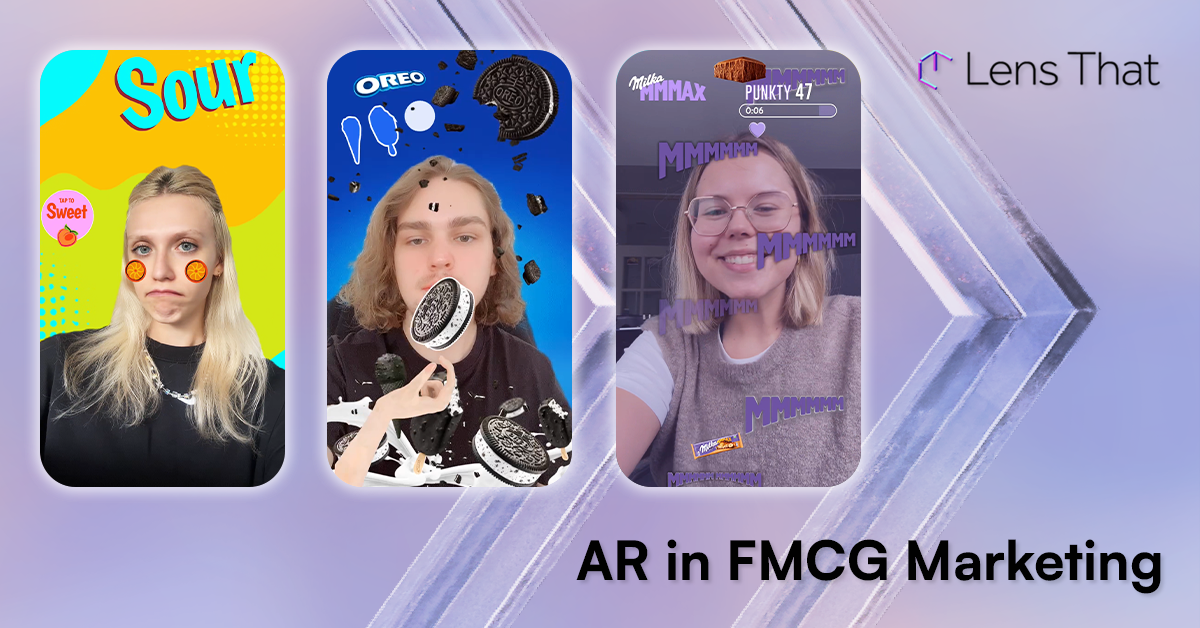
While taste can’t be replicated digitally, AR has proven highly effective in the food and beverage sector by shifting focus from the product itself to the consumer experience. Games, challenges, and interactive storytelling transform food brands into entertainment platforms.
We developed multiple AR campaigns for KFC across the Gulf States, including interactive games, trivia experiences tied to major cultural moments like the FIFA World Cup, and TikTok-powered dance challenges. These activations encouraged participation, user-generated content, and longer engagement times, while strengthening brand identity in a playful, non-intrusive way.
We also collaborated with Dubai Food Festival, creating a personalized AR experience that asked users what kind of foodie they are. By centering the campaign around user preferences, AR became a gateway into the festival itself, encouraging participation before attendees even arrived.
Automotive and Technology: Focus on Storytelling and Interaction
For automotive and tech brands, AR offers a powerful way to turn complex features into intuitive experiences, that tell a simple story of the product. Instead of long explanations or technical specs, users can explore products through interaction and discovery.
At Lens That, we partnered with Nissan on the “The Unusual Suspects” campaign for the Altima, creating an AR Filter that placed users at the center of a playful narrative. Through an interactive randomizer, users discovered the car’s key features in a way that felt more like a game than an ad.
We also worked with Philips and Logitech to design AR experiences that combined product education with entertainment, from teeth-brushing simulations to advanced virtual try-ons for gaming gear. These experiences allowed users to understand functionality while engaging on their own terms.
Culture, Art, and Entertainment. AR Beyond Marketing
In the GCC, AR is not limited to commercial use. It has also become a creative medium. When designed with intention, AR can extend cultural experiences, intensify artistic expression, and invite audiences to actively participate in storytelling.
For Dubai Design Week, we collaborated on the Neo-Majlis installation by Future Bedouin, a project we’re especially proud of, enhancing the physical structure with an AR layer accessible via QR code. The experience merged heritage and innovation, allowing users to interact with symbolic elements through head movements and immersive visuals.
Over six days, the AR experience expanded the reach of the installation far beyond the festival space, demonstrating how AR can democratize access to culture while preserving its meaning.
The Value of AR for Brands in the GCC
Across industries, the benefits of AR in the GCC are clear. It increases engagement by transforming audiences into participants. It reduces ad fatigue by replacing interruption with interaction. It encourages social sharing, extends campaign lifespan, and strengthens brand recall.
The region’s openness to new technology, combined with strong infrastructure and ambitious brands, makes it an ideal environment for immersive experiences to thrive.
At Lens That, we continue to explore how AR can be adapted across industries, platforms, and cultural contexts, helping brands move beyond advertising and into experience design.