AR Features That Actually Work in Marketing Campaigns
In today’s AR Marketing Guide, we’re taking a look behind the scenes of our extensive experience working with global brands to uncover the features that consistently deliver the best campaigns.
As an AR Creative Studio, we’ve collaborated with brands across a wide range of industries, each with its own goals, audiences, and creative vision. Some focus on interactive product exploration, while others aim to strengthen their relationship with existing communities through challenges, activations, and user-generated content.
One thing remains consistent in all cases: successful AR campaigns start with choosing the right tool.
Every collaboration is unique, which is why our role goes beyond simply creating AR experiences. We help brands identify the most effective approach, recommend platforms, and select the features that will best support their objectives. Sometimes that means creating a highly realistic virtual try-on experience, other times it’s about encouraging participation through gameplay, rewards, or social sharing.
Today, we’re focusing on features that no marketer should overlook, and most importantly, when to choose them. Whether you’re looking for inspiration or simply curious about what makes a great AR experience, here’s your guide to the TOP features that translate your brand’s message into interactive, memorable, and accessible experiences users seek online.
Face Tracking 👤
Face tracking is one of the most popular AR features in marketing, and for a good reason. It lets brands overlay digital content onto a user’s face in real time, creating highly personalized experiences that users want to share on their feeds.
Its main use is virtual try-on, helping people test makeup, eyewear, and accessories before buying. It also works well for transformation campaigns, turning users into characters, mascots, or stylized versions of themselves.
Face Tracing Advantages
➡️ Enables highly realistic virtual product try-ons
➡️ Increases buyer confidence and purchase intent
➡️ Creates highly personalized user experiences
➡️ Encourages organic sharing and user-generated content
➡️ Supports both commerce-focused and entertainment-driven campaigns
➡️ Works across major social media platforms
Campaign Examples
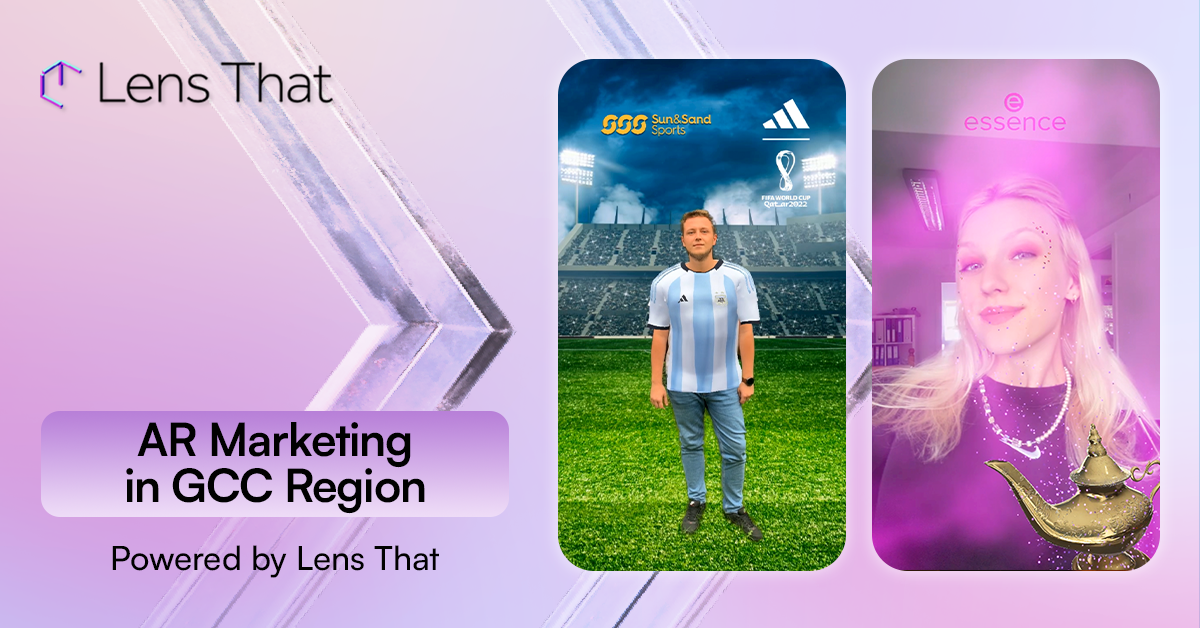
Face tracking has gained popularity in AR campaigns across beauty, fashion, entertainment, and consumer brands. With research showing that VTO (Virtual Try-On) creates 45% boost in buyer confidence and 60% less hesitation during checkout, brands across the beauty sector are implementing this approach in their own communities.
Working with big labels like Essence, L’Oréal, AA Cosmetics, Muscat, and Annabelle Minerals, we used face tracking to help consumers virtually try products ranging from foundation shades and lipsticks to mascaras and eyewear.
The same technology has also powered transformation-focused experiences. For x-kom, users could become video game-inspired characters, while collaborations with artist Augustynka and skincare brand Soraya used facial tracking to blend users with branded visual effects and animated storytelling. Seasonal activations, including Halloween-themed face transformations, further demonstrated how face tracking can turn a simple camera experience into an interactive and highly shareable campaign.
Body Tracking 🧍♀️
Body tracking allows AR experiences to recognize and respond to a user’s full-body movements in real time, creating interactive experiences that feel more natural, immersive, and physically engaging.
While body tracking is commonly associated with virtual fashion, its potential extends far beyond product visualization. It is particularly effective for games, challenges, and event activations where users interact through movement rather than taps or clicks. By making people physically participate in an experience, body tracking naturally increases engagement and memorability.
Advantages
➡️ Creates highly interactive experiences
➡️ Encourages active participation through movement
➡️ Ideal for games, challenges, and event activations
➡️ Supports virtual fashion and product visualization
➡️ Increases engagement time and repeat interactions
Campaign Examples
Similarly to face tracking, body tracking is frequently used in VTO’s, but on a bigger scale. The feature allows virtual clothing and accessories to adapt to users’ movements in real time, helping consumers visualize products on their own body instead of a model, while creating highly shareable, innovative content.
The technology also serves as a strong foundation for movement-based games and challenges. In campaigns for brands such as Fanta, users were challenged to recreate poses displayed on screen, turning simple interactions into entertaining physical experiences. Body tracking has also powered numerous AR Mirror activations for brands including McDonald’s, Samsung, and Legia Warszawa, where participants could interact with games and branded content through full-body movement during live events.
Image Tracking 📸
Image tracking connects physical and digital experiences by recognizing specific visual markers such as product packaging, posters, labels, logos, or printed materials. Once detected, these images can instantly trigger AR content, transforming everyday objects into interactive touchpoints.
This feature is particularly valuable for brands looking to extend engagement beyond social media and bring digital experiences into the physical world. By turning products and marketing materials into AR entry points, image tracking creates opportunities for storytelling, education, rewards, and post-purchase engagement.
Advantages
➡️ Connects physical products with digital experiences
➡️ Extends customer engagement beyond the point of sale
➡️ Supports interactive storytelling and product education
➡️ Encourages repeat interactions and loyalty
➡️ Creates unique packaging and retail activations
Campaign Examples
For Lubelska, scanning a bottle activated tropical-themed animations inspired by the product’s flavor, while Stock Prosecco used label recognition to unlock cocktail recipes and additional branded content.
The feature has also proven effective in loyalty-driven and gamified activations. Coca-Cola Zero incorporated image recognition into an interactive unboxing experience, while Tymbark encouraged users to scan bottle caps to unlock exclusive challenges and content. These examples demonstrate how image tracking can extend the customer journey and create value long after a product has been purchased.
World Tracking 🌏
World tracking enables digital objects to be placed and anchored within a user’s physical environment. Unlike traditional AR overlays, virtual content remains fixed in space, allowing users to move around and interact with it as if it were part of the real world.
This technology is particularly effective for product visualization and exploration, helping consumers better understand scale, design, and functionality before making purchasing decisions. It also opens opportunities for immersive storytelling, branded experiences, and interactive demonstrations that blend seamlessly with the user’s surroundings.
Advantages
➡️ Allows products to be visualized in real-world environments
➡️ Helps consumers make more informed purchasing decisions
➡️ Supports interactive product demonstrations
➡️ Enhances storytelling through spatial experiences
➡️ Increases perceived ownership and emotional connection
Campaign Examples
World tracking has become a valuable tool for brands looking to bridge the gap between digital discovery and physical ownership. We implemented this idea working with retail and home decor brands such as Selsey and Euro RTV AGD, or Nescafé to help consumers place products directly within their homes before purchase.
The same technology has also been used for interactive product exploration. Together with automotive brands including Porsche and Jeep, we encouraged users to place and inspect life-sized vehicles in their surroundings, providing a more engaging alternative to static product imagery and traditional online catalogs.
Gamification Mechanics 🎮
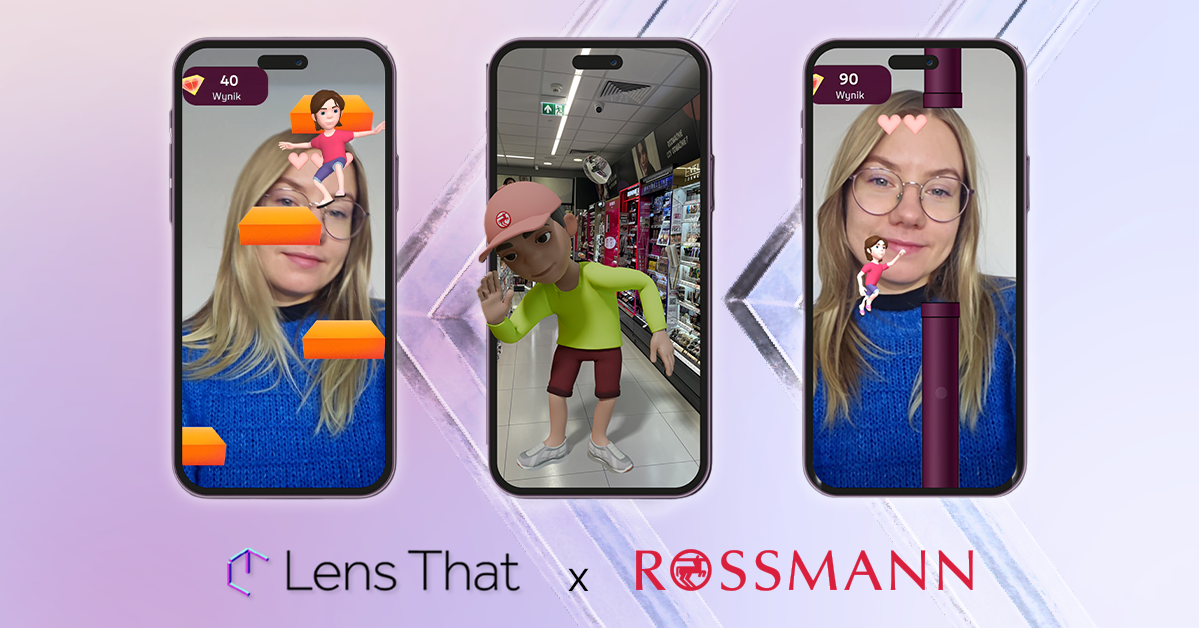
Gamification is one of the most effective ways to increase engagement in AR experiences, boosting user engagement by 100%-150%. By incorporating challenges, rewards, progression systems, and interactive gameplay, brands can transform passive audiences into active participants.
The appeal of gamification lies in its ability to tap into users’ natural motivation to compete, achieve goals, and collect rewards. Whether through simple mini-games, educational challenges, or large-scale activations, gamified experiences often generate longer interaction times, higher participation rates, and stronger organic reach than traditional advertising formats.
Advantages
➡️ Significantly increases user engagement
➡️ Encourages repeat interactions and longer session times
➡️ Creates memorable brand experiences
➡️ Drives user-generated content and social sharing
➡️ Supports education and product discovery through play
➡️ Can be adapted to both digital and physical activations
Campaign Examples
AR gamification can take many forms, from head-tracking games to gesture-controlled quizzes and large-scale event experiences. For brands such as Milka, adidas, and Puma, we used interactive game mechanics to transform product promotions into entertaining experiences, encouraging users to spend more time engaging with branded content.
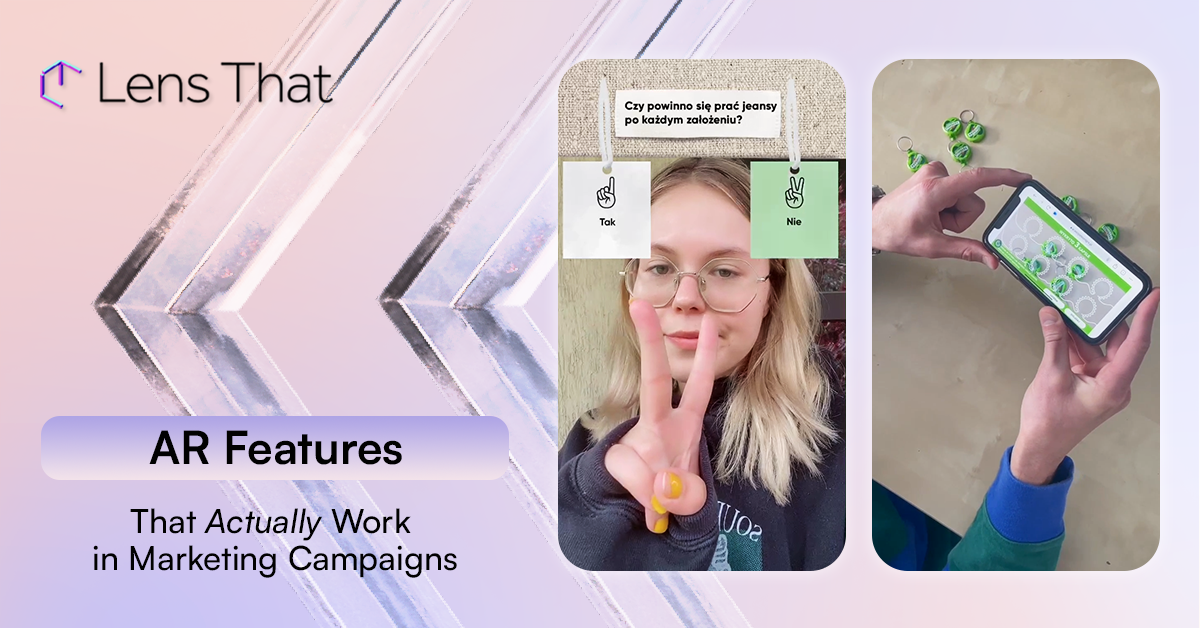
Gamification also works well in educational and event-driven environments. Our AR Filter for LPP introduced hand gesture controls within a quiz focused on clothing care, while working with LEGO, we worked on incorporating AR-powered games into a Christmas event activation, allowing children to interact with digital content through an AR Mirror.
Voice Interaction & Sound-Reactive Effects 🗣️
Voice interaction adds another layer of personalization by allowing users to participate through their voice, rather than simply tapping on the screen through spoken commands, singing, sound levels, or speech recognition.
Voice-driven experiences are particularly effective in entertainment, music, and social media campaigns, where participation becomes part of the content itself. By responding in real time to a user’s voice, AR experiences feel more dynamic, interactive, and emotionally engaging.
Advantages
➡️ Creates highly personalized interactions
➡️ Encourages active participation
➡️ Ideal for music, entertainment, and social campaigns
➡️ Makes experiences feel more immersive and responsive
➡️ Increases engagement and content creation
Campaign Examples
Voice interaction is frequently used in karaoke-style experiences, singing challenges, and interactive effects that react to speech or sound. By making the user’s voice the primary input method, brands can create experiences that feel uniquely personal and difficult to replicate through traditional advertising formats.
A notable example is the Make-A-Wish Foundation campaign we worked on, created in collaboration with singer Stacey Ryan. Users were invited to create content using an AR Effect connected to the song “Make a Wish,” with each video contributing to real-world donations supporting the foundation’s mission. In this campaign, users’ voices actually made an impact.
Location-Based AR 📍
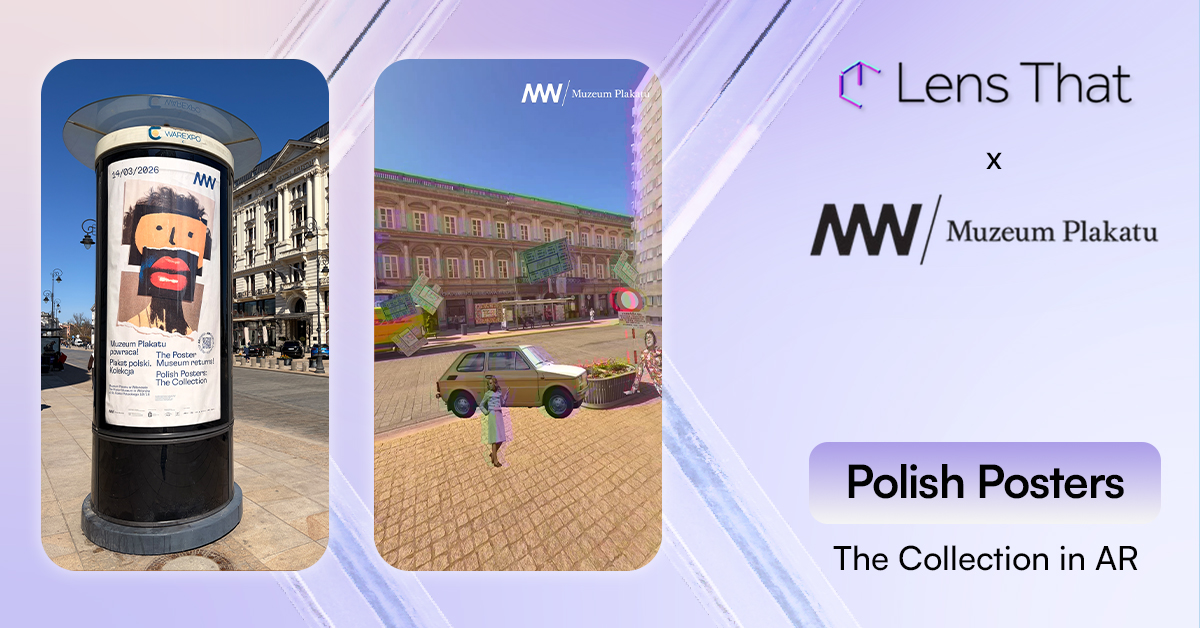
Location-based AR connects digital experiences to specific real-world places. By combining geolocation, QR codes, image recognition, and AR overlays, brands can create experiences that are only accessible in particular spaces, making them feel more exclusive.
This feature is particularly effective for tourism, retail, cultural initiatives, and large-scale outdoor campaigns. By encouraging people to visit, explore, and interact with physical locations, location-based AR bridges the gap between digital engagement and real-world behavior.
Advantages
➡️ Drives foot traffic to physical locations
➡️ Creates exclusive and memorable experiences
➡️ Encourages exploration and discovery
➡️ Supports large-scale experiential campaigns
➡️ Connects digital storytelling with real-world environments
➡️ Generates strong PR and social sharing opportunities
Campaign Examples
We worked on location-based AR before, transforming public spaces into immersive storytelling platforms for a number of brands. With the award-winning Philips Refurb campaign, passers-by near Berlin’s iconic TV Tower could scan a QR code to reveal a striking AR visualization highlighting the scale of consumer waste. The experience then guided users toward a digital storefront promoting refurbished products, turning awareness into action.
The technology has also been used to preserve cultural heritage and enrich tourism experiences. Our another award-winning campaign, Heineken’s Pub Museums initiative, transformed historic Irish pubs into interactive AR museums, allowing visitors to discover local stories, historical artefacts, and audio-guided experiences linked to each location.
Other examples include Netflix’s Valentine’s Day activation in Warsaw, where users could personalize AR love declarations projected onto a city mural, and FuzeTea’s interactive mural campaign, which combined AR animations with a personalized flavor-matching quiz. These campaigns demonstrate how location-based AR can transform everyday spaces into engaging brand experiences that people actively seek out and share.
What Makes an AR Campaign Successful?
While these features may differ in their applications, they all share one thing in common: they transform audiences from passive viewers into active participants.
The most successful AR campaigns aren’t built around the newest technology or the most complex effects. They’re built around a clear objective and the feature that best supports it. If your goal is to increase purchase confidence, virtual try-ons and product visualization may be the answer. If you’re looking to boost engagement, gamification and interactive challenges can deliver outstanding results. And if your focus is creating memorable real-world experiences, location-based AR can turn ordinary places into powerful storytelling platforms.
The key is electing the features that help your audience experience your message rather than simply see it.