Rossmania. How Rossmann Builds Customer Loyalty with Augmented Reality
Rossmania is an Augmented Reality feature inside the Rossmann app that uses avatars, games, and in-store interactions to build long-term customer loyalty among younger audiences. Read more about our strategy behind the project, and why it works.
Rossmann is one of Europe’s most recognizable drugstore brands, long associated with strong customer loyalty programs. Discounts, app-based rewards, and special offers have been encouraging customers to engage with the brand for a long time now, each time precisely targeting the needs of its shoppers.
But Rossmann doesn’t stand still. Over the years, it has evolved from paper promotional leaflets to fully digital, in-app activations, and now, it’s taking the next step, recognizing the potential in new technologies, turning to Augmented Reality.
With Rossmania, the brand shows how AR can move beyond short-term activations and become a long-term loyalty-building tool: easily accessible, personalized, and tailored.
How Is Rossmann Building Customer Loyalty with Augmented Reality?
Rossmania is not just another loyalty program. It’s a smart extension of the existing Rossmann app that introduces AR-powered gamification, transforming routine shopping into an engaging experience.
Instead of focusing on immediate sales, Rossmania adds a layer of entertainment that feels separate from everyday, mindless shopping.
The result? An app that customers return to not only for discounts, but for fun.
What Is Rossmania and How Does It Work?
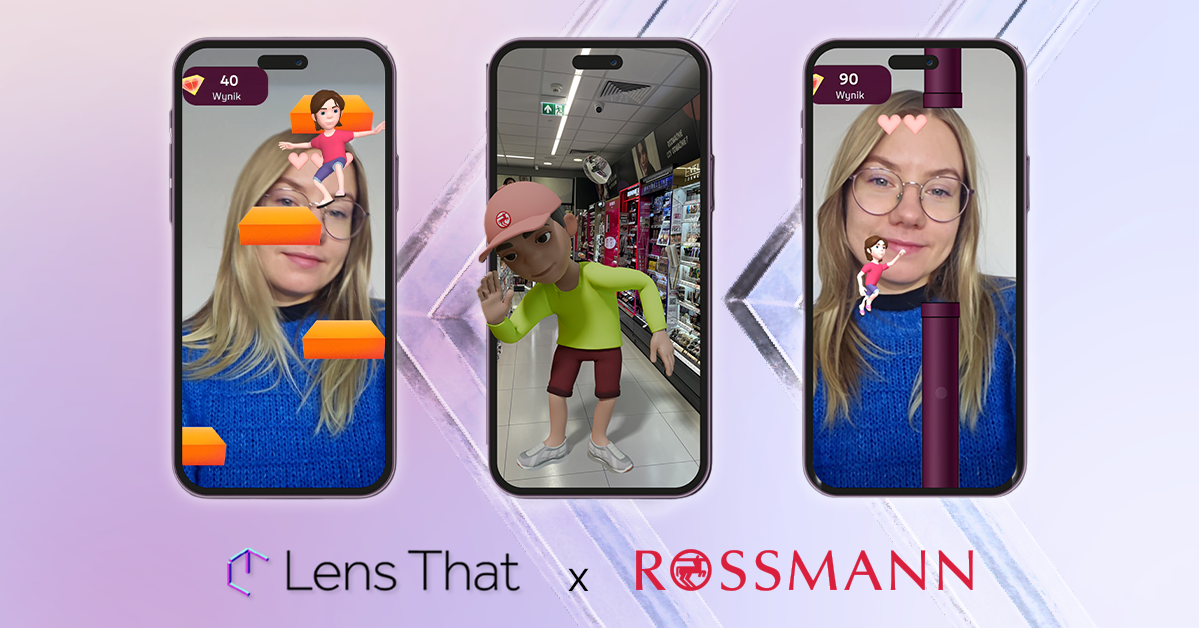
Rossmania lives inside the official Rossmann app and allows users to create a digital avatar that becomes their companion throughout the journey with the brand.
With Rossmania, users can:
➡️ Personalize their avatar with outfits and accessories
➡️ Participate in monthly-changing games
➡️ Collect points through gameplay and in-store interactions
➡️ Unlock digital and physical rewards
Points earned in games can be used for in-app purchases, such as clothes and accessories that further customize the avatar. Game performance also affects the user’s position in the official rankings, adding a competitive layer.
Social features allow users to add friends, compare scores, and interact within the Rossmania community. On top of that, engaging with real products in physical Rossmann stores unlocks bonus points and access to limited-edition items, such as a Maybelline hoodie or collectable pins designed by Natalia Kopiszka, a Polish jewellery designer.
By blending digital play with real-world interaction, Rossmania bridges online engagement and in-store presence, creating a whole ecosystem with Rossmann at the centre.
Why Is Augmented Reality Effective for Gen Z and Gen Alpha?
We designed Rossmania with younger audiences in mind. Its primary goal isn’t immediate sales growth. Instead, it focuses on long-term brand connection.
Many younger users don’t yet have the budget to spend heavily on beauty and drugstore products. Rossmann recognizes this, and instead of pushing purchases, it invites them to become part of the brand’s ecosystem early on, by offering:
➡️ Entertainment created specifically for them
➡️ A personalized, customizable experience
➡️ A sense of community and progression
Rossmann builds emotional attachment. This early relationship lays the foundation for loyalty that can last for years, growing stronger as users grow older and their purchasing capability increases.
Why Does It Work?
At its core, Rossmania succeeds because it combines personalization and gamification: the two key factors for engaging Gen Z and Gen Alpha audiences.
These generations interact with brands differently than previous ones. According to a study by Amra & Elma, 63% of Gen Alpha value having access to the latest technology. Augmented Reality fits perfectly into this expectation: it’s innovative, immersive, and easily accessible through a smartphone.
Younger audiences also value authentic branding. Rossmania doesn’t feel like an ad or a forced promotion. Instead, it offers genuine interaction. Something users can shape, customize, and grow on their own terms.
Most importantly, the experience feels personal. Users can create an avatar that’s uniquely theirs, see them in real-world spaces through AR, and interact with physical products to earn digital rewards, growing their character further.
This blend of digital creativity and real-life engagement turns customers into active participants rather than passive consumers.
AR as a Long-Term Loyalty Strategy
Rossmania is a strong example of how AR can move beyond one-off campaigns and become a meaningful part of a brand’s community. By embedding AR into an existing app and focusing on long-term engagement rather than immediate sales, Rossmann shows how technology can be used to build real, lasting customer loyalty, showing the customer-first approach that consumers truly appreciate.